Do Grip Socks Actually Prevent Ankle Injuries?
Quick Answer: Grip socks reduce one specific injury mechanism - the foot sliding on a smooth surface - and there is a reasonable case that they help with slip-related incidents in studio settings. What they do not do is stabilise the ankle joint, support the arch, or prevent the rolled ankle that comes from landing badly. They also change nothing about the fatigue and proprioception factors behind most ankle injuries. Useful for slip prevention on reformers and studio floors, not a substitute for strength or footwear.
They stop your foot sliding on a smooth surface.
That is a real thing, and it is a much narrower claim than the packaging suggests.
This is general information, not medical advice.
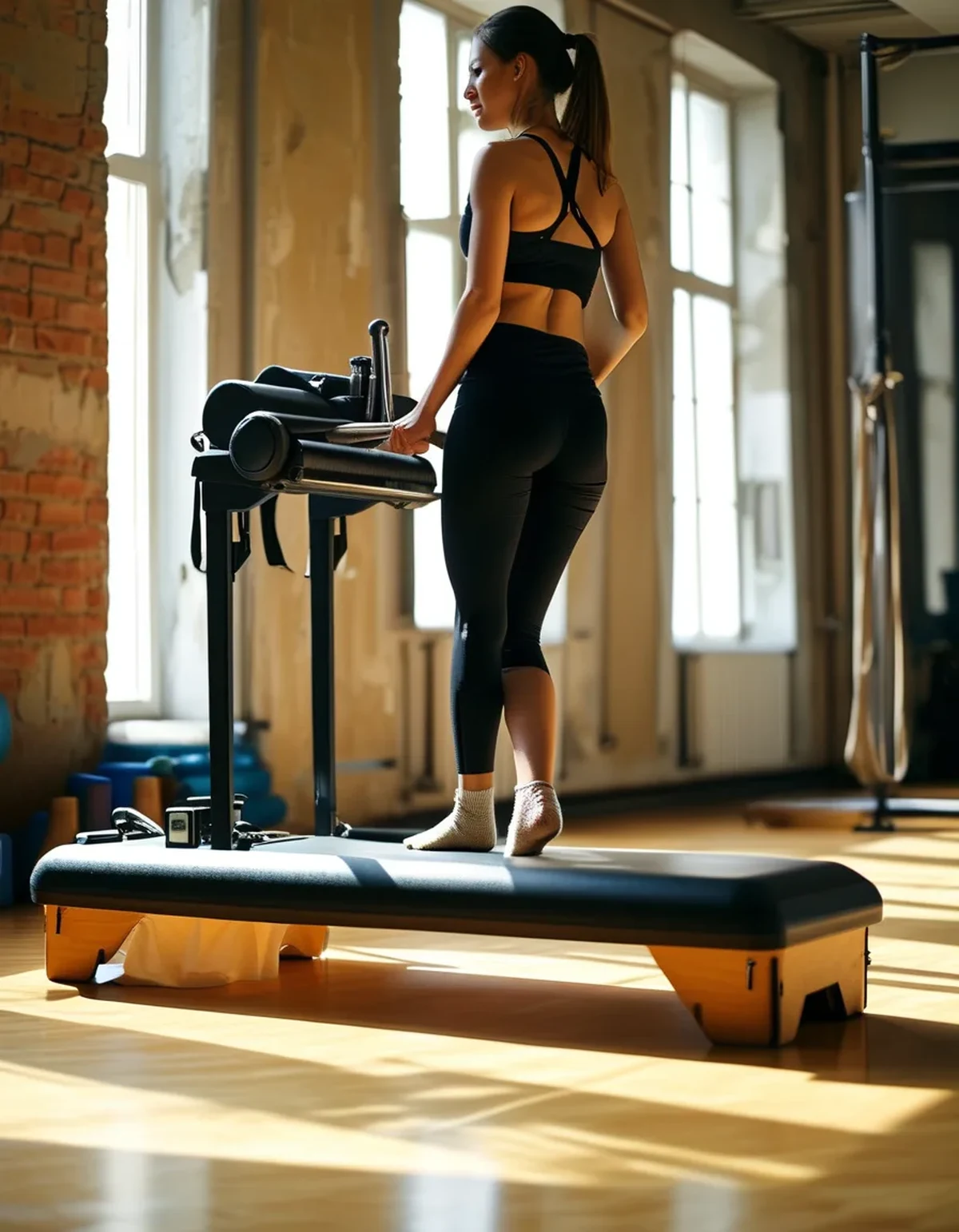
What do grip socks actually do mechanically?
They increase friction between the sole of the foot and the surface. That is the entire mechanism.
The silicone or rubber dots on the sole raise the coefficient of friction between sock and floor to something closer to bare skin, and often better than bare skin when the skin is sweaty.
What that meaningfully prevents:
- The foot sliding out during a lunge or split stance on a polished floor
- Slipping on a reformer carriage or footbar, which is smooth and often damp
- Losing footing during lateral movement in barre or dance-based classes
- The specific hazard of sweat on a studio floor, which is where most studio slips originate
These are genuine and non-trivial. In a Pilates or barre setting, slipping is a real injury mechanism - a foot sliding out under load can strain a hamstring, groin or ankle immediately.
What grip socks do not do:
- They provide no structural support to the ankle joint. A sock has no stiffness and cannot resist inversion
- They do not support the arch in any meaningful mechanical sense, unless the sock specifically includes a compressive arch band - and even then the effect is modest
- They do not absorb impact, so they change nothing about landing forces
- They do not improve balance except indirectly, by removing the slip risk that makes people tentative
The distinction that matters clinically: most ankle sprains are inversion injuries - the ankle rolls outward as the foot lands on an uneven surface or at an angle. Nothing about a sock’s surface friction affects that mechanism. If anything, better grip on a foot that is already at a bad angle transmits more force to the joint, not less.
So when do they genuinely help?
In smooth-floor, low-impact, indoor settings - which is exactly where they are sold.
The environments where the friction argument holds up:
- Reformer Pilates, where the carriage and footbar are smooth and slipping is the primary hazard
- Barre, with lots of single-leg work on polished floors
- Mat Pilates and yoga on hard floors, particularly in humid conditions
- Studio floors that get sweaty, which is most of them by the end of a class
- Trampoline and rebounder work, where the surface is deliberately slick
In these settings the grip is not a nice-to-have. Many reformer studios require grip socks specifically because carriage slips are a recurring incident type, and that policy comes from experience rather than retail partnership.
Where they are neutral or unhelpful:
- On a sticky yoga mat, where bare feet already grip well and socks can actually reduce feel
- In any activity involving jumping and landing, where impact and joint position matter more than surface friction
- On carpet or textured surfaces, which already provide grip
- In strength training, where a flat firm sole and stable footwear matter more
A specific caution about excessive grip: in movements that require a controlled pivot or slide - some dance and mobility work - too much grip can be a problem. A foot that cannot rotate while the body does transmits that rotation to the knee. This is a real consideration in dance-based classes and an argument for choosing socks with moderate rather than maximal grip patterns.
And the proprioception trade-off is worth naming. Bare feet give the richest sensory feedback from the floor, which contributes to balance and joint positioning. A sock layer reduces that slightly. For most people the slip protection outweighs it; for someone specifically working on foot and ankle proprioception, bare feet may be better where the surface allows.
What actually reduces ankle injury risk?
Strength, balance training and appropriate footwear - in that order.
The evidence base for ankle injury prevention points consistently at balance and proprioceptive training. Single-leg balance work, wobble board or unstable surface training, and progressive strengthening of the muscles around the ankle have the strongest support of any intervention.
A practical baseline:
- Single-leg balance, 30 seconds per side, progressing to eyes closed
- Calf raises, both double and single leg, 3 sets of 12 to 15
- Resisted ankle eversion with a band - the peroneals are the muscles that resist rolling and they are commonly weak
- Hopping and landing drills for anyone doing impact activity, focusing on controlled landing
History matters enormously. A previous ankle sprain is the strongest single predictor of another one, largely because proprioception is impaired after injury and often never fully rehabilitated. Anyone with a history of sprains gets more benefit from six weeks of balance work than from any equipment.
Footwear does real work in the settings where it applies. For running and court sports, a shoe with appropriate stability and a well-fitted heel counter is a genuine factor. For studio work, the surface friction question is where socks come in - and that is the correct scope for them.
Bracing and taping have good evidence for people with a history of sprains, particularly during return to sport. That is a different category of intervention from a grip sock and should not be confused with one.
Fatigue is the underrated variable. Ankle injuries cluster in the later part of sessions and games, when neuromuscular control declines. Managing session length and intensity is a legitimate prevention strategy and costs nothing.
If you have recurring ankle pain, instability or a history of sprains that have not been properly rehabilitated, that is worth seeing a physiotherapist about rather than solving with socks.
Myth vs Fact: Grip Socks and Injury
Myth: Grip socks support your ankles. Fact: A sock has no structural stiffness and cannot resist the joint rolling. What it does is increase friction between the foot and the floor. Those are entirely different mechanisms, and only the second one is what grip socks deliver.
Myth: More grip is always better. Fact: In movements requiring a controlled pivot, excessive grip transmits rotation up to the knee instead of allowing the foot to turn. Moderate grip patterns are better for dance-based classes than maximal ones.
Myth: They replace the need for balance training. Fact: Balance and proprioceptive training has the strongest evidence of any ankle injury prevention approach. Grip socks address one specific slip mechanism and change nothing about joint control, landing mechanics or fatigue.
Myth: Bare feet are always better for proprioception. Fact: Bare feet do give richer sensory feedback, which matters. On a slick or sweaty studio floor, the slip risk usually outweighs that benefit - which is why the answer depends on the surface rather than being universal.
Myth: Studios require them to sell them. Fact: Reformer studios require them because carriage slips are a recurring incident type. The requirement generally predates the retail display and comes from insurance and experience.
Myth: Arch support in a sock does what arch support in a shoe does. Fact: A compressive band in a sock provides some sensory feedback and very little mechanical support. It is not comparable to a structured insole, and marketing that implies otherwise is overstating it.
FAQ: Grip Socks and Injury Questions, Answered
Will grip socks stop me rolling my ankle?
No. Rolled ankles are inversion injuries where the joint turns as the foot lands at an angle, and a sock has no stiffness to resist that. Grip socks prevent the foot sliding on a smooth surface, which is a different mechanism entirely.
Are they worth it for reformer Pilates?
Yes, and many studios require them for good reason. The carriage and footbar are smooth and often damp, and a foot slipping under load is a genuine strain risk. This is the setting where the friction argument is strongest.
Should I wear them for yoga?
On a sticky mat, bare feet usually grip better and give more feedback. On a hard studio floor, or in a hot humid class where sweat is a factor, grip socks make more sense. It depends on the surface rather than the discipline.
Can too much grip be a problem?
In movements requiring a pivot, yes. A foot that cannot rotate while the body turns transmits that rotation to the knee. For dance-based classes, moderate grip patterns are preferable to full-coverage maximal ones.
What actually prevents ankle sprains?
Balance and proprioceptive training has the best evidence - single-leg work, unstable surface training and progressive strengthening, particularly of the peroneal muscles that resist rolling. A previous sprain is the strongest risk factor, so rehabilitation matters more than equipment.
Do grip socks with arch bands help flat feet?
They provide some sensory feedback and very little mechanical support. They are not comparable to a structured insole or supportive footwear, and persistent arch pain is worth having assessed rather than treating with socks.
TL;DR:
- Grip socks increase friction between foot and floor - that is the whole mechanism
- They genuinely reduce slip incidents on reformers, barre floors and sweaty studio surfaces
- They provide no ankle joint support and do not prevent inversion sprains
- Excessive grip can be a problem in pivoting movements, transmitting rotation to the knee
- Balance and proprioceptive training has the strongest evidence for ankle injury prevention
- A previous sprain is the biggest risk factor - rehab it properly rather than relying on equipment
- Bare feet grip a sticky mat well; socks win on hard, smooth or damp floors
Useful for what they actually do. Not what the packaging implies.
Keep Reading
This article is for general informational and styling purposes only. Fit, sizing, and product availability may vary.