Grip Socks and Plantar Fasciitis: What Actually Helps
Quick Answer: Standard grip socks provide no arch support and no cushioning, so they do nothing to reduce the load on an irritated plantar fascia - but they are not the cause of the problem either. What helps is compression through the arch, avoiding the harder barefoot-equivalent surfaces, warming the foot up before class, and being realistic that footwear choices matter far less than load management does.
A compression grip sock is worth trying. It is a comfort measure, not a treatment.
What is plantar fasciitis actually doing?
It is an irritation of the thick band of tissue running along the sole from heel to toes, and understanding the mechanism explains why sock choice has limited leverage.
The plantar fascia acts like a bowstring across the arch. When you load the foot, the arch flattens slightly and the fascia stretches to resist it, then recoils to help push off. Repeated over enough steps and enough load, the tissue at the attachment point - usually where it meets the heel bone - becomes irritated and painful.
The classic presentation is very recognizable: sharp heel pain in the first steps out of bed, easing after a few minutes of walking, and returning after long periods of sitting. That pattern exists because the fascia shortens while you are still and gets abruptly re-loaded when you stand.
What drives it is usually a combination of:
- A sudden increase in load - more classes, more standing, a new activity, more walking
- Calf and Achilles tightness, which limits ankle dorsiflexion and increases strain through the fascia
- Reduced foot intrinsic muscle strength, so the fascia takes more of the arch’s work
- Surfaces and footwear that changed recently
Note where footwear sits on that list. It is a contributing factor, not usually the driver. This matters because the instinct when the heel hurts is to buy something, and the intervention with the largest effect is almost always adjusting how much load the foot is under and strengthening what supports it.
Which sets realistic expectations for the sock question: a sock can make a class more comfortable. It will not resolve the underlying irritation. This is general information, not medical advice - persistent heel pain deserves a proper assessment.
Do grip socks make it worse?
Not directly, but they can be part of a change that does.
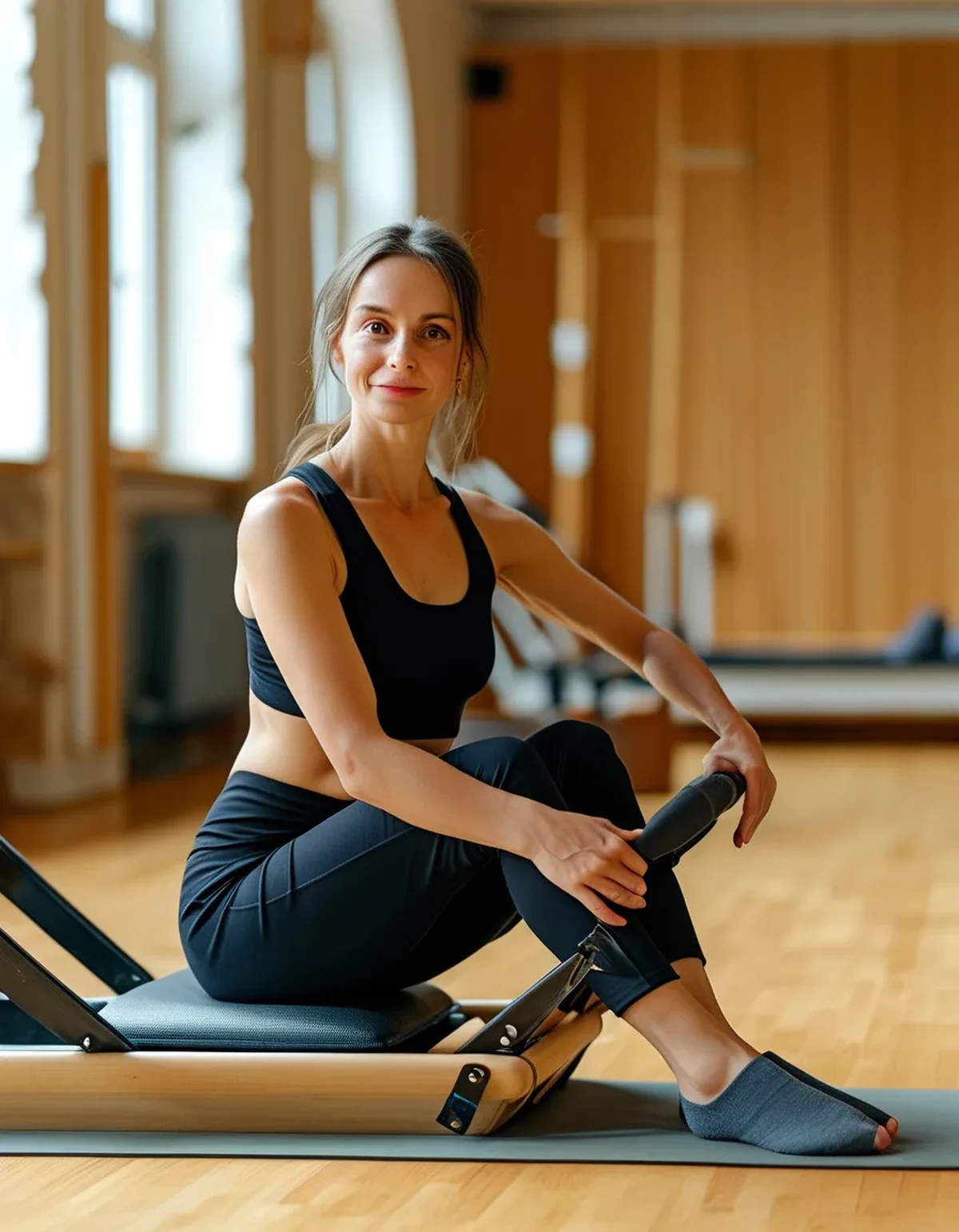
A grip sock is essentially a barefoot condition with traction added. It provides no meaningful cushioning, no arch support, and no heel elevation. So a studio class in grip socks loads the foot much the way walking barefoot does.
That is not inherently bad - barefoot loading is normal and generally good for foot strength. The problem arises with transitions. Someone who spends all day in supportive trainers and then does several reformer classes a week in grip socks has changed the load on their fascia substantially, and a sudden change is exactly what provokes it.
The surface matters too, and studio floors vary more than people notice. A sprung wooden floor is forgiving. A reformer carriage is firm but you are not weight-bearing much of the time. A concrete floor with thin vinyl over it - increasingly common in converted studio spaces - is genuinely hard, and standing work on it in grip socks is a meaningful load.
What this means practically:
- If heel pain started shortly after you began a new studio practice, the transition is a likely contributor, and the answer is to build volume more gradually rather than to abandon the class.
- If your class involves a lot of standing work on a hard floor, that is a bigger factor than the sock itself.
- If you have been doing the same practice for a year and the pain is new, look elsewhere - a change in daily footwear, walking volume, or a new activity is more likely.
One genuine benefit worth noting: barefoot-style loading, introduced gradually, strengthens the intrinsic foot muscles that support the arch. Over time that is protective. It is the rate of change, not the condition itself, that causes trouble.
Which sock features actually help?
Three, in descending order of usefulness.
1. Compression through the arch. This is the feature with the most support behind it. A sock with genuine graduated compression or a firm elastic band across the midfoot provides a small amount of external support to the arch and, more importantly, sensory feedback that many people find reduces discomfort. This is essentially a low-grade version of the taping techniques physiotherapists use for this condition, and taping does have reasonable evidence. Look for socks described as compression or arch-support grip socks rather than standard ones - the difference is noticeable when you put them on.
2. A full-foot grip pattern rather than a few dots. Grip dots concentrated at the ball and heel create localized pressure points. A more evenly distributed grip pattern spreads contact, which is more comfortable on a sensitive sole. It is a small effect but a free one.
3. Slightly thicker knit through the sole. Not cushioning in the trainer sense - no sock provides that - but a denser knit takes a marginal edge off a hard floor. The trade-off is less floor feel, which some people dislike in pilates specifically.
What does not help despite being marketed:
- Toe socks versus closed toe. Toe separation is a comfort and grip preference. It has no bearing on fascia load.
- Extra grip. More traction does not reduce load; if anything, very high-grip socks slightly increase rotational stress at the foot, though the effect is small.
- Anything claiming to treat the condition. No sock treats plantar fasciitis. Socks that describe themselves as supportive and comfortable are being honest; ones promising to cure heel pain are not.
The honest summary: a compression grip sock is a worthwhile few dollars for comfort. Set expectations accordingly and put your effort into the things below.
What Nobody Tells You About the First Five Minutes
How you start the class matters more than what is on your feet, and almost nobody does anything about it.
Plantar fasciitis pain is at its worst on re-loading after rest. The tissue shortens while you are still, and going straight from sitting into weight-bearing puts an abrupt stretch through an already-irritated attachment. That is exactly the first-steps-in-the-morning pain - and exactly what happens when you arrive at a studio after driving there and step straight onto the floor.
A five-minute warm-up before class changes this significantly, and none of it requires equipment:
- Calf stretches, held. Two positions - knee straight for the gastrocnemius, knee bent for the soleus - 30 seconds each side, twice. Calf tightness is one of the most consistently associated factors, and this is the most valuable single item.
- Rolling the sole. A tennis ball, a frozen water bottle, or a dedicated ball under the arch for a minute or two per foot. Gentle pressure, not grinding.
- Toe raises and towel scrunches. Ten to fifteen slow repetitions to wake up the intrinsic muscles before they are asked to work.
- Ankle circles and gentle weight shifts before any real loading.
And the corresponding point about after class: the fascia will stiffen again when you sit down. Standing up carefully rather than abruptly, and doing a short calf stretch before you leave, makes the rest of the day easier.
The strengthening piece deserves a mention because it has better evidence than almost any passive intervention: slow, heavy calf raises, progressed over weeks, are one of the best-supported approaches for this condition. Done off a step with a slow lowering phase, a few times a week. It is unglamorous, it takes months, and it works better than any sock. This is general information, not medical advice - a physiotherapist can tailor the progression.
FAQ: Grip Socks and Heel Pain Questions, Answered
Can I wear my orthotics in a pilates class?
Not in grip socks, and most studios will not permit shoes. Some people use a thin adhesive arch support inside the sock, which is a reasonable compromise if it stays put. Ask your studio - many are flexible about foot conditions if you explain, and some allow a soft indoor shoe for people who need it.
Should I stop going to class until it settles?
Usually not entirely. Complete rest often feels good briefly and then the pain returns on resumption, because nothing has changed underneath. Reducing volume, avoiding the most provocative movements - typically standing work and anything on the toes - and continuing with what is comfortable is generally the better route. A clinician can advise on your specific case.
Do compression socks help outside of class too?
Many people find wearing a compression sock in the evening or first thing in the morning helps with the initial-steps pain. Night splints, which hold the foot in a stretched position while you sleep, have better evidence than daytime socks but are less comfortable. Either is a comfort measure alongside the strengthening work rather than a replacement for it.
How long does this usually take to resolve?
Longer than people hope - often several months, and sometimes longer, even with good management. That timeline is worth knowing in advance, because the main reason people abandon effective strengthening programs is expecting results in weeks. Persistent or worsening pain, pain that does not follow the classic pattern, or numbness and tingling should be assessed by a professional.
TL;DR:
- Grip socks are essentially barefoot with traction - no support, no cushioning - but they are rarely the cause of heel pain.
- The usual trigger is a sudden increase in load, often a new studio practice combined with a hard floor.
- Compression through the arch is the one sock feature with real value; toe separation and extra grip do nothing for the fascia.
- Five minutes before class - calf stretches, rolling the sole, toe raises - matters more than what you wear.
- Slow heavy calf raises over months have the best evidence of anything here, and no sock substitutes for them.
Buy a compression grip sock for comfort, then spend your actual effort on calf stretching and progressive strengthening. This is general information, not medical advice.
Keep Reading
This article is for general informational and styling purposes only. Fit, sizing, and product availability may vary.