The Grip Sock Detail Reformer Pilates Studios Actually Check For
Reformer studios are pickier about grip socks than any other studio type, and it’s not arbitrary — the moving carriage and metal foot bar create slip risks that a mat class simply doesn’t have. Showing up with the wrong pair is one of the more common first-class mistakes.
Why Reformer Is Stricter Than Mat
The equipment-specific risk: the the-moving-carriage-factor (the reformer’s sliding carriage meaning footing has to hold under active movement, not just static poses, which raises the bar for grip quality), the the-metal-footbar-slip-risk (the metal footbar being notably more slip-prone than the fabric-topped mat surface most grip socks are designed for), the the-studio-liability-reason (many reformer studios enforcing grip socks as a hard entry requirement specifically because of past slip incidents, not as a style preference).
What Studios Actually Check
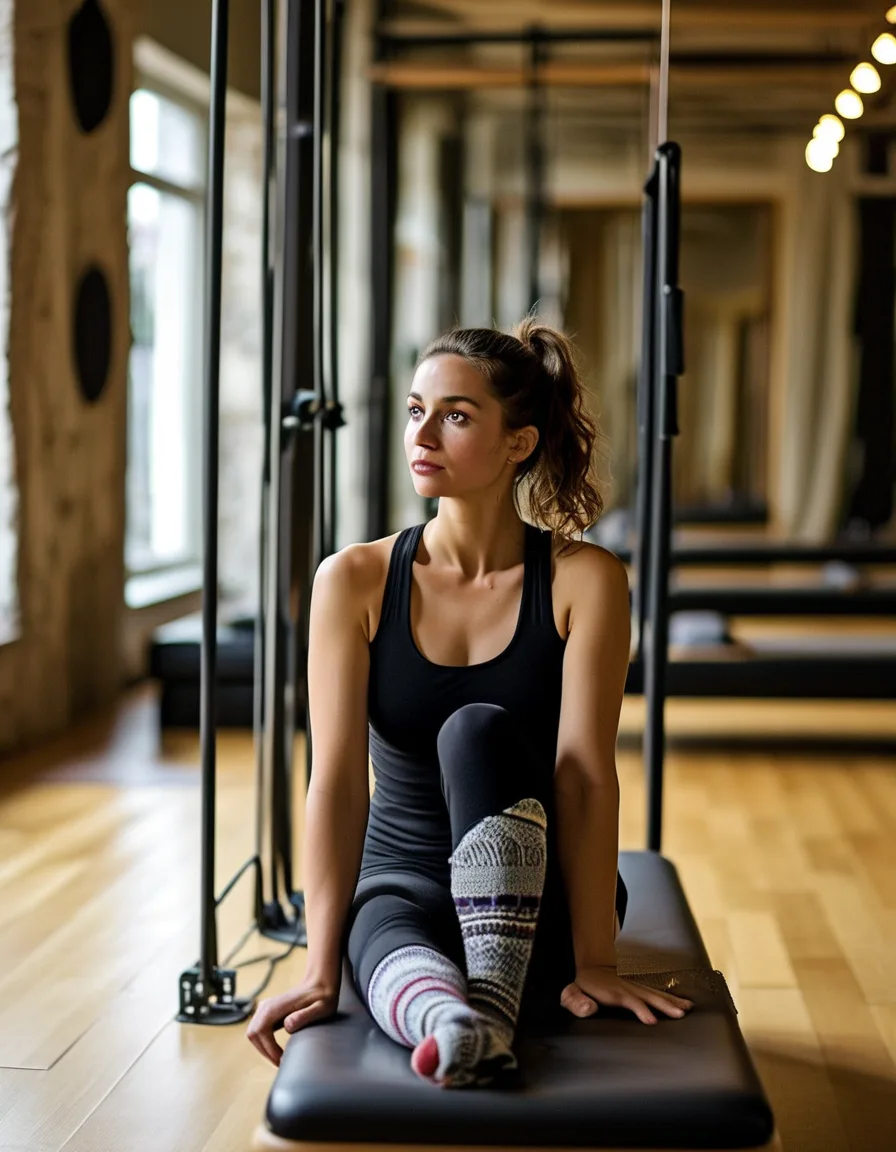
The specific details: the the-full-sole-coverage-requirement (studios typically requiring grip dots across the full sole and toe area, rejecting socks with grip only at the heel or ball of the foot), the the-open-toe-vs-closed-toe-debate (some reformer instructors preferring open-toe styles for better footbar feel, though this varies by studio and isn’t universal), the the-worn-out-grip-rejection (staff visually checking for worn-flat grip dots on older socks and asking guests to swap to studio-provided pairs when grip has degraded).

Choosing a Pair That Actually Works
The buying guidance: the the-silicone-over-rubber-longevity (silicone-based grip dots holding up to repeated carriage friction longer than rubber-based ones, which matters for anyone attending multiple times a week), the the-fit-snugness-check (a sock that’s slightly snug rather than loose preventing the fabric from bunching under the arch during footbar work), and the frame (full-sole silicone grip in a snug fit is what actually passes reformer studio standards, not just any grip sock)).
Reformer Pilates studios enforce grip sock rules more strictly than mat classes do, and the reason is mechanical rather than cosmetic: the reformer’s sliding carriage and metal footbar demand grip that holds up under active movement, not just in static poses, which is a meaningfully higher bar than a fabric mat surface requires. Studios typically check for full-sole grip coverage, reject socks with grip only at the heel or ball of the foot, and will flag pairs where the dots have worn flat from repeated use. Silicone-based grip holds up to that carriage friction longer than rubber, and a snug rather than loose fit keeps fabric from bunching under the arch during footbar work. The Grip Sock Detail Reformer Pilates Studios Actually Check For turns out to be less about brand and more about full coverage and fit.
Keep Reading
This article is for general informational and styling purposes only. Fit, sizing, and product availability may vary.