Why Your Grip Socks Stop Gripping After a Few Washes — and How to Actually Fix It
Quick Answer: Grip socks lose traction mainly from fabric softener and high heat drying, both of which coat or degrade the silicone grip dots — washing in cold water without softener and air-drying preserves the grip significantly longer.
The grip socks that felt secure on day one now slide slightly during a reformer class. It’s tempting to assume the grip material has just worn out, but for most socks, the washing routine is the actual culprit.

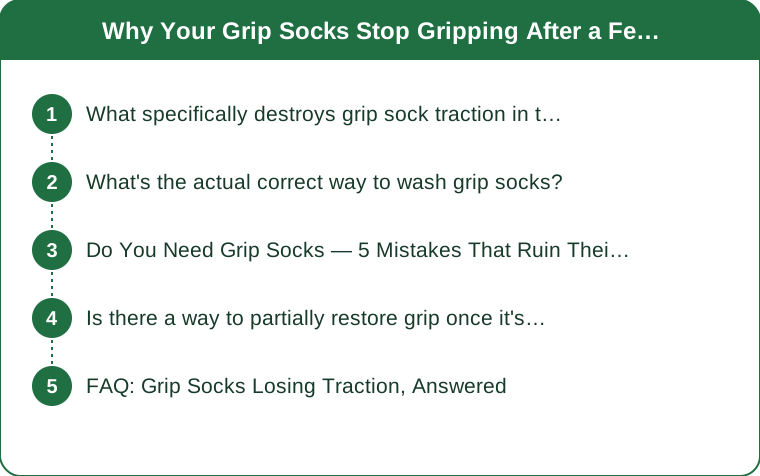
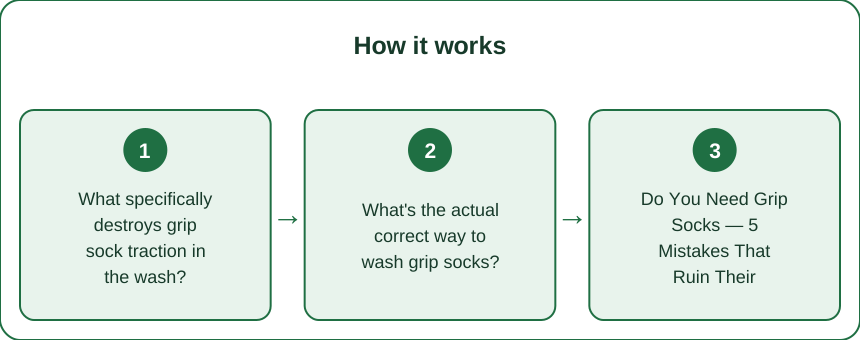
What specifically destroys grip sock traction in the wash?
Fabric softener is the single biggest culprit — it leaves a coating residue on the silicone grip dots that reduces their tackiness significantly, sometimes after just one or two washes. High-heat machine drying is the second major factor, since heat can degrade the silicone material’s texture and elasticity over repeated cycles.
What’s the actual correct way to wash grip socks?
Cold water, no fabric softener, turned inside out to protect the grip dots from friction against other items in the wash. Air-drying flat, rather than machine drying, preserves both the silicone grip and the sock’s overall shape significantly longer than heat drying does.

Do You Need Grip Socks — 5 Mistakes That Ruin Their Traction
1. Using fabric softener, even ‘just this once.’ 2. Machine drying on high heat repeatedly. 3. Washing grip-side against rough fabric like denim, which abrades the silicone dots. 4. Ignoring visible wear on the grip pattern and continuing to use them on slippery floors anyway. 5. Storing them balled up with the grip sides pressed together for long periods, which can cause dots to stick and degrade over time.
Is there a way to partially restore grip once it’s already faded?
Some improvement is possible — wiping the grip dots with a slightly damp cloth before class removes surface dust and can temporarily restore some tackiness, though this doesn’t reverse softener damage or worn-down silicone. Once the silicone itself has degraded significantly, replacement is the more reliable fix.
FAQ: Grip Socks Losing Traction, Answered
How many washes can a good pair of grip socks handle before losing grip?
With proper cold-water, no-softener washing, many grip socks maintain solid traction for 30-50+ washes; softener use can cut that significantly.
Are some grip sock brands more wash-durable than others?
Yes — sock brands using thicker silicone application or rubberized dots (versus thin printed grip) tend to hold traction longer through repeated washing.
Should grip socks be washed after every single use?
Not strictly necessary for hygiene unless heavily sweated in — washing every 2-3 uses reduces wash-related wear while still keeping them fresh.
TL;DR:
- Fabric softener and high-heat drying are the two main causes of grip sock traction loss
- Wash cold, without softener, turned inside out, and air-dry flat instead of machine drying
- Avoid washing grip sides against rough fabric that can abrade the silicone dots
- Once silicone dots are visibly worn down, replacement is more reliable than restoration
Grip socks losing their grip is usually a laundry habit problem, not a product defect — the fix is in the wash cycle, not a new pair.
Keep Reading
This article is for general informational and styling purposes only. Fit, sizing, and product availability may vary.