How Should Grip Socks Actually Fit? The Sizing Mistakes Everyone Makes
Quick Answer: Grip socks should fit snug through the arch and heel with zero excess fabric bunching at the toes — loose fabric anywhere reduces the grip pads’ contact with the floor. When between sizes, size down rather than up.
You bought grip socks, they still slide around, and you assumed the grip pads just weren’t strong enough. More often, the sock itself is too loose — extra fabric between your foot and the floor cancels out even good grip material.
Why does a loose grip sock fail even with good grip pads?
The grip pads only work when they’re making direct, stable contact with the floor. If the sock shifts around your foot, the pads shift with it — landing at slightly different spots each step instead of staying put under pressure points.
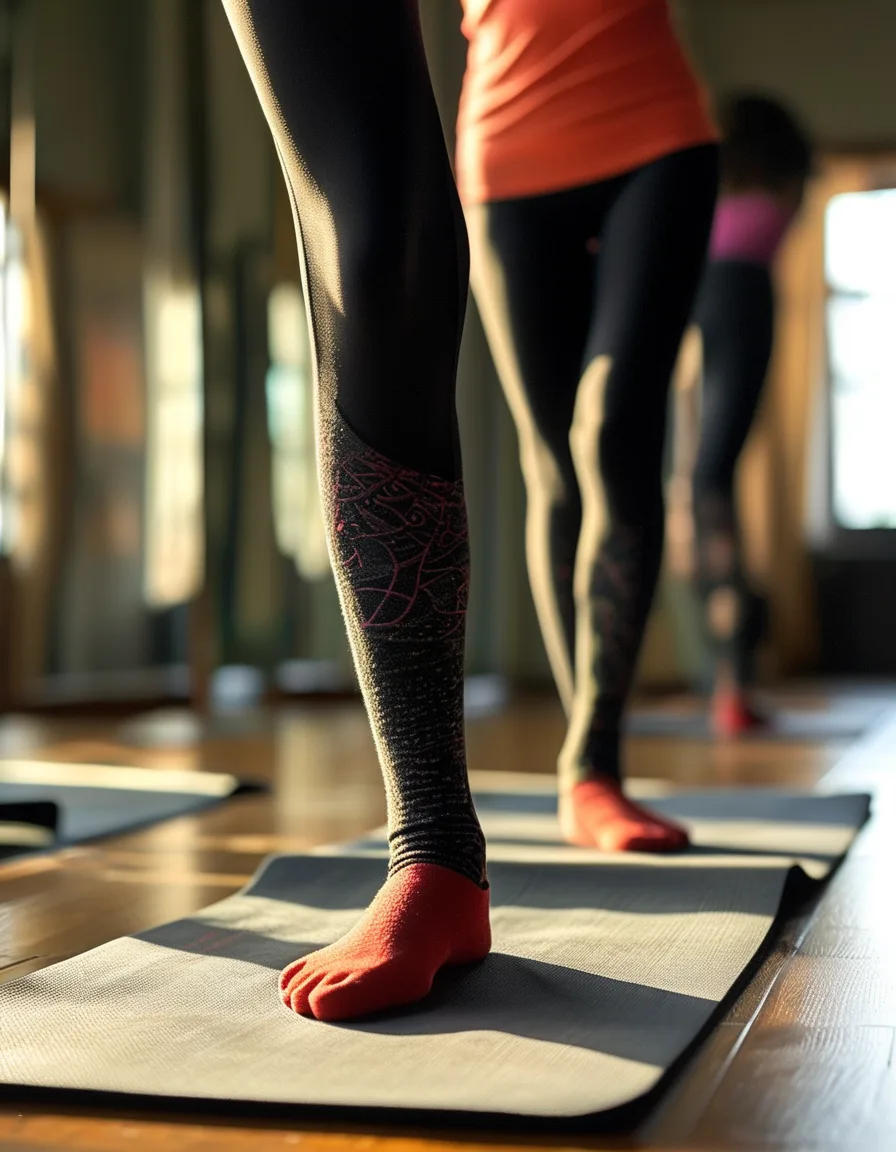
A snug fit keeps the grip pads locked under your heel and forefoot exactly where they need to be during a lunge, squat, or reformer slide.
What does ‘correctly snug’ actually feel like?
Firm through the arch and heel with no fabric that bunches when you flex your foot. You should be able to see your foot’s natural shape through the sock, not a baggy silhouette.
Toe area is the exception — it should have slight room to avoid a cramped, seam-across-toes feeling, but not loose fabric flapping at the tip.

5 Sizing Mistakes People Make With Grip Socks
1. Sizing up ‘for comfort’ — this is the single biggest mistake; loose grip socks are actively worse than no grip socks.
2. Ignoring arch height — high arches need a sock with more structured arch compression, or gaps form under the foot.
3. Buying based on shoe size alone — grip sock sizing charts often use foot length in inches/cm, not shoe size, which varies by brand.
4. Not accounting for stretch-in. Some grip sock fabrics loosen slightly after a few washes — buy true-to-size, not stretched out.
5. Wearing them inside-out by accident, which puts grip pads against your skin instead of the floor — check orientation before class.
How do you find your correct size if you’re between two?
Size down. Grip socks rely on compression-level snugness to keep pads in place; a slightly tight fit that relaxes with wear works better than a loose one that never tightens.
Measure foot length heel-to-toe in centimeters and check it against the specific brand’s chart — shoe size alone is not a reliable substitute.
FAQ: Grip Sock Sizing Questions, Answered
Do grip socks stretch out over time?
Slightly, with fabric wear — which is another reason to size down rather than up initially.
Should grip socks feel tight around the toes?
No — snug through the arch and heel, but toes should have a small amount of room to avoid pinching.
Can the wrong size cause blisters?
Yes — both too-tight and too-loose grip socks can cause friction and blistering; correct sizing minimizes shifting that leads to hot spots.
TL;DR:
- Snug through arch and heel, slight room at toes — no bunching fabric anywhere
- Loose grip socks cancel out even strong grip pads by letting them shift
- Size down when between sizes; fabric relaxes slightly with wash and wear
- Measure foot length in cm against the specific brand’s chart, not shoe size
Get the fit right and the grip pads finally do the job they were designed for.
Keep Reading
This article is for general informational and styling purposes only. Fit, sizing, and product availability may vary.