Grip Socks Beyond Pilates: The Sports That Quietly Adopted the Sticky Sole
Grip socks escaped the pilates studio — footballers wear them inside boots, trampoline parks mandate them, barre and yoga split the difference — and each sport’s version is quietly different. The sticky-sole map: who wears what, why and the buying differences that matter.
The Studio Family
The original habitat: the pilates-and-barre standard (full-sole grip, snug fit — the reformer-and-studio safety spec from the original chapter), the yoga variant (the toeless and open-top versions that keep barefoot feedback with sole coverage — the hygiene-plus-grip compromise for shared studios), the differences that matter (studio socks prioritize grip-pattern coverage and breathability — the all-day-wearable comfort tier; the fashion-forward strap styles serving the aesthetic-conscious), and the studio etiquette settled (required at most reformer studios, welcomed everywhere — the loaner-sock purchase at the desk converts to owned pairs universally).
The Football Crossover
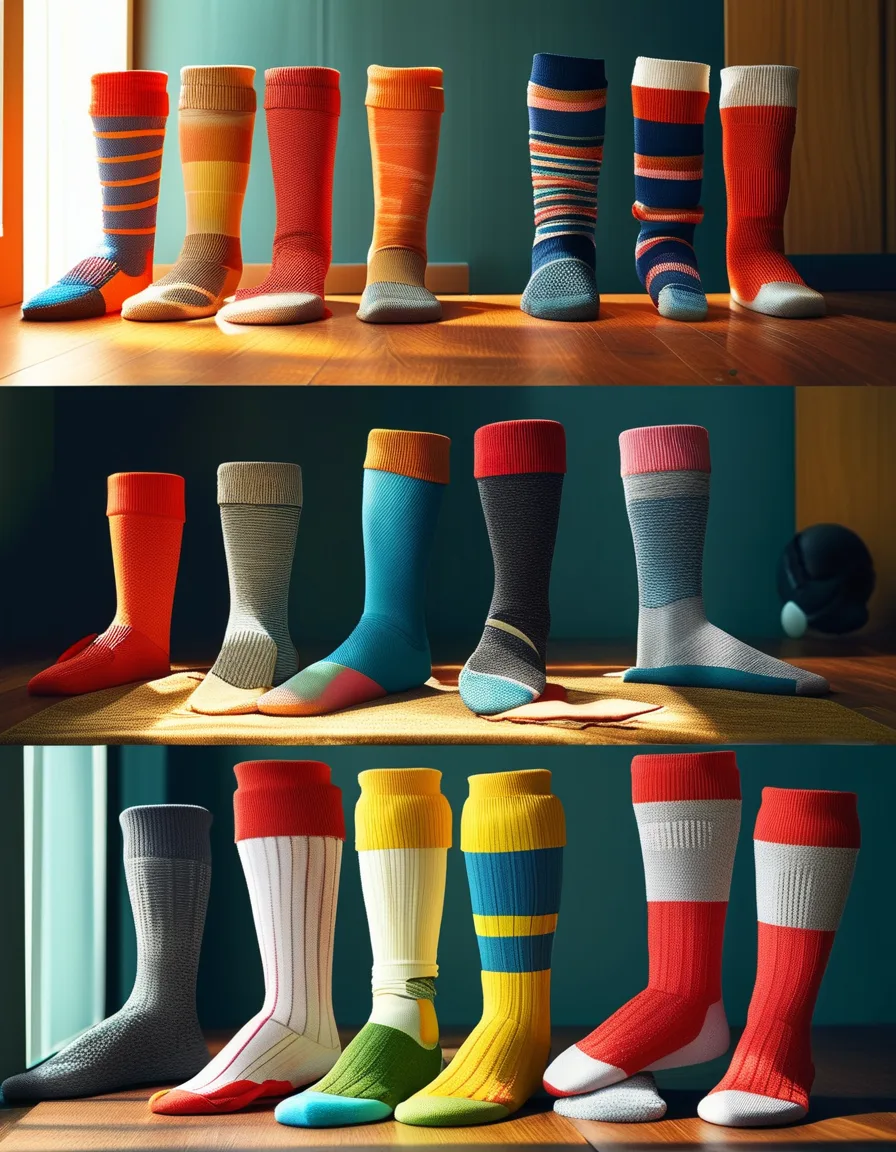
The sport that industrialized them: the boot-sock revolution (footballers cut their team socks and wear grip socks inside boots — the foot-to-boot slip that costs agility, eliminated; the practice that went from pro secret to youth-league standard), the mechanism (the grip interfaces foot-to-sock AND sock-to-boot — the lockdown that makes cuts sharper; the blister reduction as the side benefit), the spec differences (football grip socks run thicker-cushioned with aggressive internal-and-external grip — the studio sock in a boot would shred; the sport versions are built for it), and the crossover note (the same boot-sock tier serves court sports — the netball-basketball-tennis adopters chasing the same lockdown).
The Bounce-and-Balance Venues
The mandated tier: the trampoline-park standard (grip socks required at essentially every park — the safety spec that built a retail category at every front desk; the park socks are real grip socks, and they recycle into home-workout duty), the kids’-gym and play-center adoption (the same slip-safety logic at family scale), the home-workout application (the quiet-workout and wall-pilates crowds on smooth floors — the grip sock as home-studio flooring substitute; the hardwood lunge slip, solved), and the balance-training crossover (the barefoot-adjacent stability work where socks-with-grip beat socks-without — the compromise when full barefoot isn’t the venue’s option).
The Buying Map
Matching sock to sport: the studio spec (breathable, full-pattern sole, snug — the multi-pack economy for the class-weekly), the sport spec (cushioned, aggressive grip, boot-compatible — the football tier priced higher and earning it), the trampoline tier (the park-desk versions work; the owned pair beats rebuying), the care universal (inside-out cold wash, hang dry — the grip compound outlives careless laundry by years when respected; the dryer note from the original chapter governs all tiers), and the one-drawer honesty (the sticky-sole drawer serving studio, home floor and park trips — the category that started as a pilates requirement and became household infrastructure). One idea, many soles: friction, where feet need it.
Studio socks breathe, football socks cushion, parks mandate their own, wash them all cold. Grip socks conquered sport by solving one physics problem everywhere — slip, deleted.
Keep Reading
This article is for general informational and styling purposes only. Fit, sizing, and product availability may vary.