Grip Socks vs. a Sticky Yoga Mat: Which One Actually Stops You From Slipping
Quick Answer: A high-quality sticky mat provides more consistent grip for standing poses and transitions, while grip socks solve a different problem — hygiene on shared studio floors and grip specifically on non-mat surfaces like a Pilates reformer, so the two aren’t really substitutes for each other; the combination of both handles sweat and shared-surface hygiene at the same time.
Most people who feel like they “still slip” after buying grip socks were actually solving a mat problem with a sock, not the reverse.
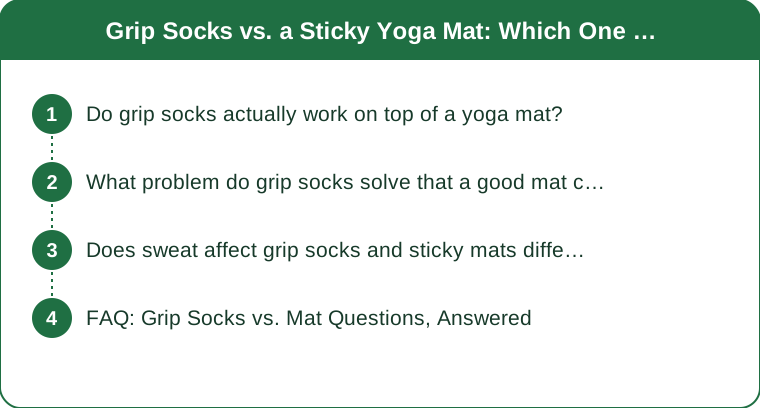
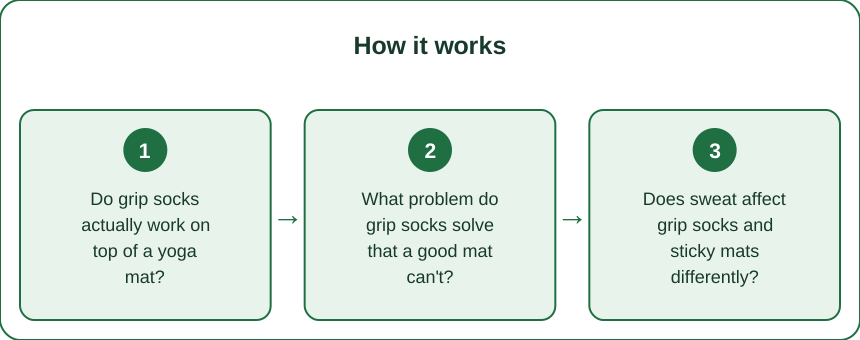
Do grip socks actually work on top of a yoga mat?
It depends on the mat surface — grip socks with rubberized dots grip well on smooth or worn mats but can feel oddly slippery on a very sticky, high-traction mat, since two grippy textured surfaces sliding against each other don’t always behave the way skin-on-mat contact does. Testing your specific sock-mat combination before a sweaty class matters more than assuming compatibility.
What problem do grip socks solve that a good mat can’t?
Grip socks solve equipment shared by many people that isn’t a personal mat — reformer beds, barre studio floors, and shared rental mats — where barefoot contact raises hygiene concerns and where the equipment surface itself (not a mat you control) determines your grip. A great personal mat doesn’t help on a shared Pilates reformer.

Does sweat affect grip socks and sticky mats differently?
Yes — sticky mats tend to lose grip progressively as sweat pools on the surface, while grip socks with raised silicone dots often maintain grip longer since the dots create point-contact rather than relying on flat-surface tackiness. This is part of why heavily sweat-prone classes (hot yoga, intense barre) sometimes favor sock-based grip over relying on mat stickiness alone.
FAQ: Grip Socks vs. Mat Questions, Answered
Can grip socks replace a mat entirely for at-home workouts?
On hard flooring, yes for many bodyweight and barre-style movements, but grip socks don’t provide the cushioning a mat offers for floor work on knees or joints, so they aren’t a full substitute for mat-based practices.
Which one wears out faster, a sticky mat or grip socks?
Sticky mats typically show wear (smoothing, reduced tack) faster than well-made grip socks, since mats absorb direct floor friction across a much larger surface area during every single practice.
Is it overkill to use grip socks and a sticky mat together?
Not for hot or high-sweat classes — many instructors specifically recommend the combination for hot yoga or advanced barre, where sweat volume alone can defeat a mat’s grip regardless of sock use.
TL;DR:
- A sticky mat and grip socks solve different problems, not competing versions of the same one
- Grip socks matter most on shared studio equipment where hygiene and personal traction both count
- Sweat degrades mat stickiness faster than it degrades raised-dot sock grip
- High-sweat classes often benefit from combining both rather than choosing one
Figuring out which surface is actually causing your slipping is the fastest way to fix it — the fix isn’t always the sock.
Keep Reading
This article is for general informational and styling purposes only. Fit, sizing, and product availability may vary.